It often begins in less than three seconds. A 16-year-old scrolling through TikTok pauses on a student video, watches for a moment, and then decides, almost instantly, whether to keep watching or move on. That brief interaction, seemingly insignificant, is in fact the starting point of a much broader journey. One that no longer begins with a university website, a brochure, or even a search engine, but within a stream of content designed for discovery, immediacy, and instinctive engagement.
For years, institutions have invested heavily in providing information. They have refined their websites, structured their content, and optimized their funnels to ensure that prospective students could access everything they needed. Yet Gen Alpha is not looking to passively receive information. They are looking to ask questions and receive immediate, tailored answers. Their expectation is not navigation but conversation.
Whether through messaging platforms, chat interfaces, or increasingly through artificial intelligence, the interaction they seek is direct, responsive, and continuous. This reflects a broader shift already highlighted by industry experts: Gen Alpha is growing up in constant connectivity, where digital tools are not an addition but a default way of interacting with the world.
Tools like ChatGPT are becoming a reflex, a space where students explore, compare, and validate decisions in real time. In this context, institutions are no longer the only, or even the first, source of information. What is particularly striking is how early this mindset develops. At fifteen or sixteen, students are already approaching their educational choices with the logic of decision-makers. They compare options rapidly, assess relevance almost instinctively, and form opinions within seconds.
There is little room for hesitation. For institutions, this fundamentally shifts the challenge. Visibility alone is no longer sufficient; what matters is the ability to create an immediate sense of connection.
One Journey, Multiple Touchpoints
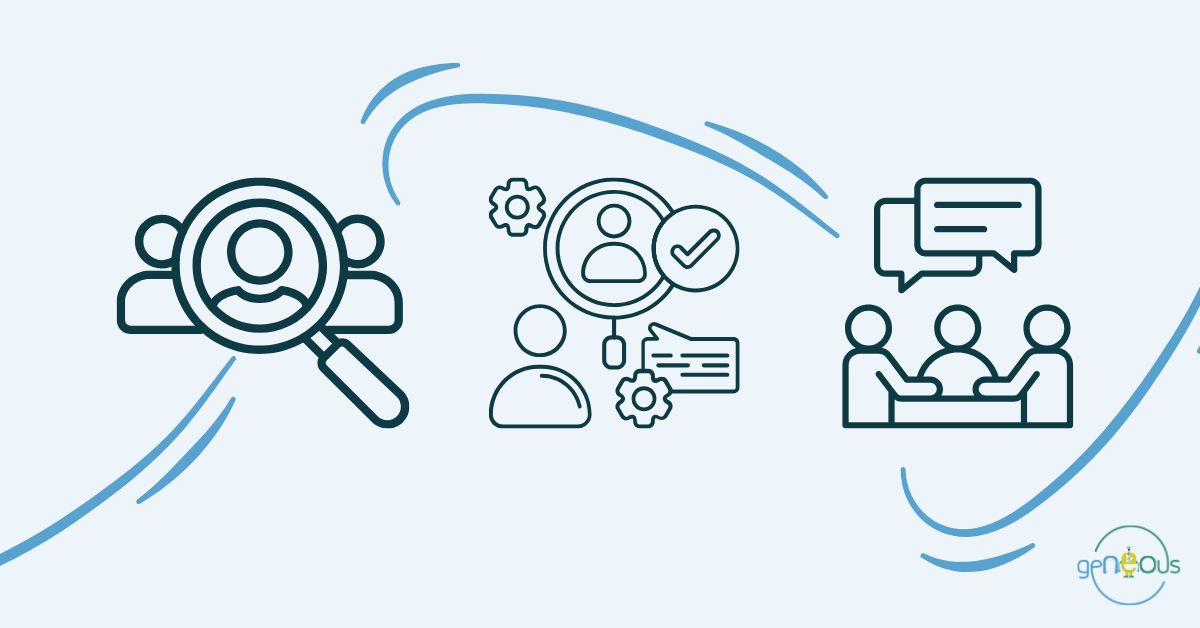
At the same time, the journey itself has become far more complex. A single student may discover an institution through a short-form video, explore its culture through longer content, ask questions on social media, and validate their impressions through conversations with peers. Simultaneously, they may turn to AI tools to refine their thinking, test scenarios, or compare institutions in real time.
Parallel to this, parents are conducting their own research through more traditional channels, seeking reassurance, structure, and clarity. As highlighted in this Working with Gen Z: intergenerational communication in international student recruitment, generational differences already shape how students and families engage with information. If this shift was already evident with Gen Z, it becomes even more pronounced with Gen Alpha, who are growing up in a fully digital, AI-augmented environment.
What emerges is not a linear funnel but a multi-layered ecosystem of decision-making. And this is where one of the most important shifts lies: Gen Alpha is not waiting to be marketed to; they are actively seeking relevance, reassurance, and connection across multiple touchpoints.
The challenge for institutions lies precisely here. While prospective students navigate seamlessly across platforms and formats, institutions often continue to operate in silos, responding to each channel independently, with varying messages and levels of responsiveness. This disconnect creates friction in an environment where tolerance for delay or inconsistency is virtually nonexistent.
In a context where students can compare multiple institutions within minutes, any gap in the experience becomes a point of vulnerability. The expectation is no longer just presence, but coherence.
Discovery and Conversation: A New Balance
A key distinction has therefore become essential in understanding this new landscape. Some platforms function primarily as spaces of discovery, where students encounter ideas, stories, and possibilities. Others operate as spaces of conversation, where they seek clarification, test assumptions, and engage more directly.
This aligns with a broader evolution already visible in higher education marketing: social platforms are increasingly used not only for entertainment, but as search engines where students actively look for information and validation.
The rise of conversational environments, including private messaging platforms and AI-driven interfaces, signals a deeper behavioral shift. Students no longer want to browse; they want to interact. They expect to ask, refine, and explore in real time, moving fluidly between inspiration and decision-making.
The Evolving Role of Email
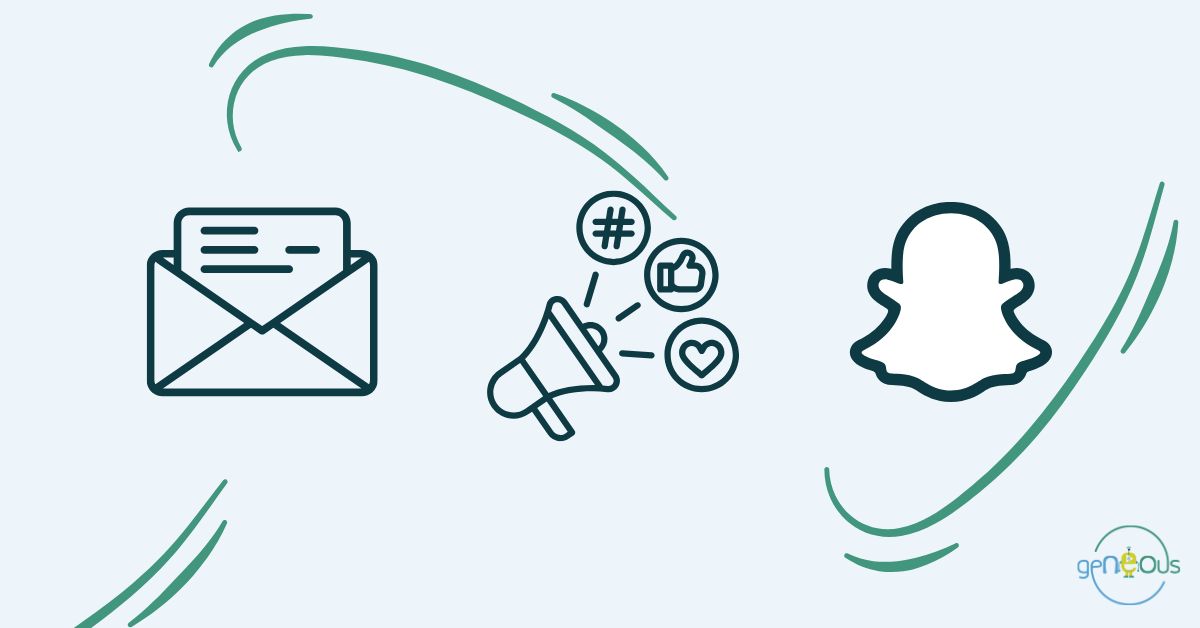
Within this evolving dynamic, the role of traditional channels has also changed. Email, for instance, remains relevant but has been repositioned. It is no longer the primary medium for initiating dialogue but serves instead as a channel for formal communication, detailed information, and the consolidation of decisions already shaped elsewhere.
Attempting to engage students through email alone is increasingly ineffective, not because the channel lacks value, but because it no longer aligns with the immediacy that defines their expectations.
Understanding Snapchat: Behavior Over Conversion
It is important to clarify that the role of platforms like Snapchat is often misunderstood. The objective is not necessarily for institutions to use it as a primary recruitment tool, nor to expect direct conversions from it. Rather, its value lies in what it reveals about student behavior.
Snapchat is one of the applications where younger audiences spend a significant portion of their time, engaging in frequent, informal, and highly personal interactions. It is a space defined by spontaneity, proximity, and continuous exchange. Understanding how students communicate in this environment, how they share, respond, and maintain relationships, offers valuable insight into their broader expectations.
In that sense, Snapchat is less about visibility and more about observation. It helps institutions better understand the communication codes, rhythms, and interaction patterns that shape this generation. These insights can then inform how institutions design their presence and engagement strategies across all channels.
Responsiveness as a Measure of Quality
Perhaps the most significant shift is the emergence of responsiveness as a defining measure of quality. Students do not simply evaluate institutions based on their academic offerings or reputation; they also assess how quickly and effectively those institutions respond to them.
In an environment where questions can be asked and answered instantly, delays are no longer neutral, they are decisive. If one institution does not respond, another will. And in that moment, the choice may already be made. This expectation is rooted in a broader reality: Gen Alpha expects seamless, technology-enabled experiences across all aspects of their lives, including education.
This is where the role of technology becomes critical. Conversational tools, including chatbots and AI systems, are not intended to replace human interaction but to ensure continuity. They prevent silence, provide immediate engagement, and maintain momentum in the early stages of the relationship.
From Channels to Usage
Underlying all these changes is a deeper transformation in how students search for and process information. The shift is not simply from one platform to another but from one mode of engagement to another.
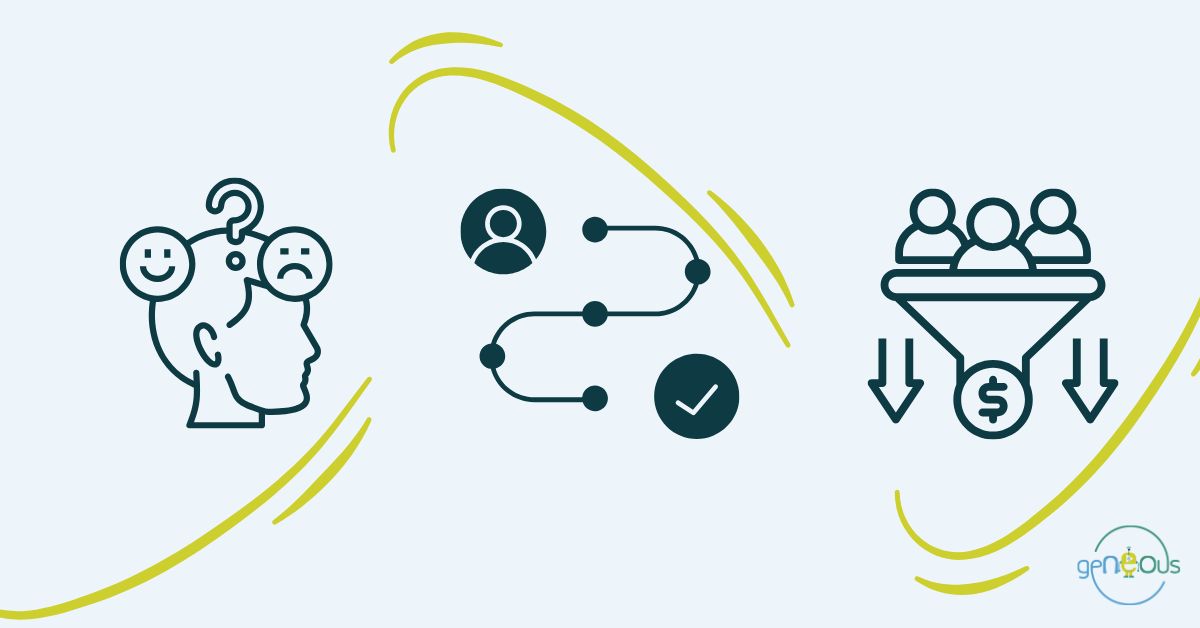
Discovery is increasingly driven by video. Exploration is shaped through conversation. Decision-making is supported by artificial intelligence. We are witnessing a transition from Google as a search engine, to social platforms as discovery engines, and now to AI as a decision-making layer.
This evolution reflects a broader reality: the strategies that worked for Gen Z will not be sufficient for Gen Alpha. Institutions must rethink how they engage with a generation that is more connected, more informed, and more demanding than any before.
Equally important is the recognition that institutions are no longer addressing a single audience. The decision to pursue higher education is shaped by a network of influences, most notably students and their parents, each with distinct expectations and priorities.
Students are drawn to experiences, identity, and projection into the future. Parents focus on security, outcomes, and return on investment. Communicating effectively therefore requires not only differentiated messaging but also consistency across all sources of informationes pecially in an era where both audiences may rely on the same AI tools to inform their decisions.
Designing for a New Reality
In this context, visibility alone is insufficient. Institutions must ensure that their content is not only accessible through traditional search engines but also accurately interpreted and represented within generative AI environments.
Clarity, coherence, and reliability become essential, as information is no longer simply read, it is interpreted, summarized, and recommended by intelligent systems. At the same time, authenticity plays a growing role. This generation is highly sensitive to overly polished messaging and tends to trust real experiences, peer voices, and unfiltered content more than institutional narratives.
Ultimately, what emerges is a need for a fundamental shift in perspective. It is about moving from static communication to dynamic interaction, from isolated touchpoints to continuous journeys, and from information delivery to meaningful engagement.
Gen Alpha is not less engaged than previous generations; they are simply engaged differently. They move quickly, expect immediacy, and value authenticity over perfection. They do not wait for information to be delivered; they seek it, shape it, and challenge it in real time. They are digital by default, mobile-first, and AI-native.
For institutions, adapting to this reality is not merely a matter of keeping pace with technological change. It is about understanding a new form of relationship, one defined by conversation, speed, and the ability to connect meaningfully from the very first moment. Because in a world where everything happens in seconds, connection is no longer built over time. It is decided instantly.
Moving From Insight to Action
For institutions navigating this shift, the challenge is not simply to adopt new tools or expand their presence across more channels. It is to rethink how marketing, recruitment, and admissions come together into a coherent, responsive, and student-centered experience.
This requires aligning strategy with execution, combining human insight with technological capability, and ensuring that teams are equipped to operate in an environment defined by speed, complexity, and constant change. It also means recognizing that sustainable growth does not come from isolated initiatives, but from an integrated approach that connects data, systems, and people.
These are conversations that are increasingly central across the sector. As institutions look to better understand evolving student behaviors and translate them into effective enrollment strategies, the need for a more holistic, integrated approach becomes clear.
For French-speaking professionals who would like to explore these dynamics further, you can watch the full webinar here:
https://www.keg.com/typ_webinar-gen-a-marketing-fr
If these reflections resonate with your current challenges or ambitions, this is a conversation worth continuing.